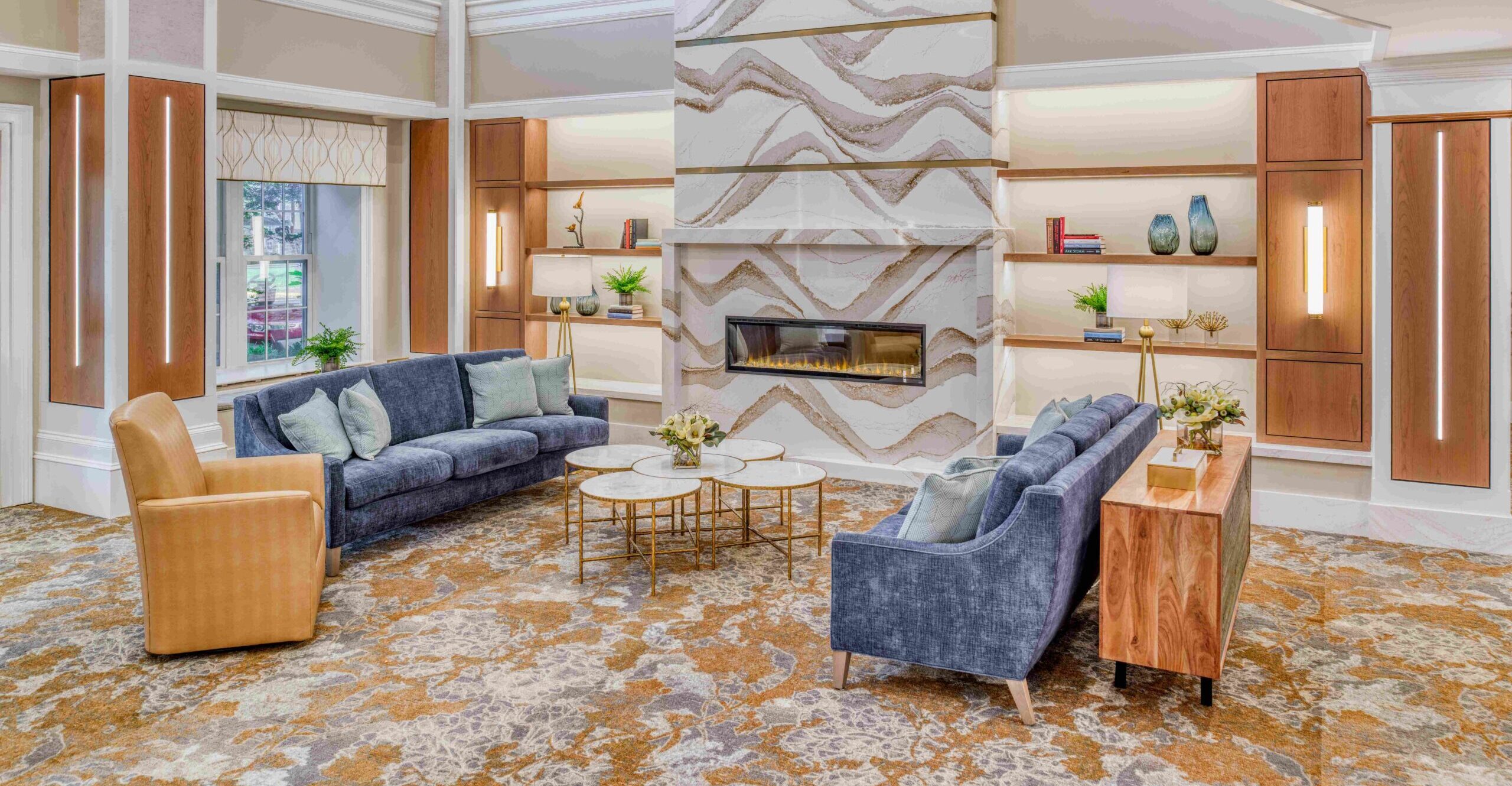
In celebration of World Interiors Day, Noelker and Hull’s interior design team joins professionals around the world in recognizing the evolving role of design—one that continues to adapt to new trends while inspiring future generations of designers.
Across industries such as senior living, hospitality, and healthcare, interior design is increasingly shaped by a focus on wellness, sustainability, and human connection. As Kate Cashdollar, Senior Associate and Director of Interiors, shares, “Interior design is a professional discipline that combines creativity, human psychology, technical knowledge, and problem-solving to shape how people experience space.”
Trends including biophilic design, low-toxicity materials, and recyclable or upcycled products are redefining how spaces are experienced, emphasizing environments that support both personal well-being and environmental responsibility. “With Biophilic Design, humans feel better connected to nature. It emphasizes natural light, plants, water, natural materials, and flowing forms because environments affect well-being,” Kate explains. For Noelker and Hull’s interior design team, these trends are not just emerging ideas, they are grounded in the personal experiences and philosophies that first drew them to the profession.
Inspired by Experience: Paths into Interior Design
For Kate Cashdollar and Adair Pagnotta, ASID, CHID, NCIDQ, Senior Associate and Director of Hospitality and Senior Living Interiors at Noelker and Hull, this philosophy has been a guiding force throughout their careers. Adair, inspired at a young age by her mother, who was an art teacher, developed a passion for creativity that continues to influence her approach to design today.
She emphasizes that interior design goes far beyond aesthetics. Adair shares, “Interior design has a much deeper connection than simply surface-level styling. Our interior environments affect emotions, stress levels, and cognitive performance. Through careful consideration of color, pattern, texture, natural lighting, and acoustics, we can create spaces that promote physical health, safety, and a sense of calmness.”
For Kate, it was the desire to make a meaningful difference in people’s everyday lives through the built environment. She shares, “I’ve always been fascinated by the way spaces can influence how we feel, think, and interact with the world around us,” she adds, “I was drawn to the idea that thoughtful design has the power to positively impact daily life, whether through creating spaces that feel welcoming and inspiring, support productivity and creativity, or provide a sense of peace and belonging. The built environment affects us constantly, often in ways we don’t immediately notice.”
Designing for Well-Being and Connection
The power of design comes to life most clearly in the spaces where people live, gather, and recharge. In senior living community settings, thoughtfully designed spaces help foster comfort, connection, and meaningful experiences for residents and guests. Grounded in the principle of “less is more,” a concept popularized by the famous modernist architect Ludwig Mies van der Rohe, our team strives to balance clarity, simplicity, and functionality.
By allowing the natural beauty of materials to take center stage, our team creates environments that feel both intentional and inspiring. Adair expresses, “The idea is to reveal pure natural beauty without distracting from the quality or meaning of the original design intent. This allows us to explore the true creative freedom and inspire the world around us.”
Doing More with Less: The Future of Design
Looking ahead, designers are challenged to do more with less. As building footprints become smaller due to rising construction costs, there is a growing emphasis on space flexibility, access to the outdoors, and spaces that support social engagement and overall well-being. Design strategies such as biophilic integration, multifunctional spaces, and efficient layouts not only respond to current constraints but also create more meaningful, human-centered environments. As the industry continues to adapt, the role of designers extends far beyond today’s projects to shaping the future of the profession itself.
Inspiring the Next Generation of Designers
In the spirit of World Interiors Day, we are reminded that design is not just about what we see, but how we experience the world around us. Each environment we create is an opportunity to support wellness and vitality while leaving a positive impact on the people who move through the spaces every day. Kate expresses, “I hope to encourage future generations by leading with passion, innovation, and authenticity, while emphasizing the importance of individuality and purpose in design. As the industry evolves alongside advancements in technology, sustainability, and accessibility, I want to demonstrate that interior design can be both forward-thinking and deeply personal. My goal is to inspire others to see design as an opportunity to solve problems, tell stories, and create spaces that positively impact communities and the people within them.”
If you’re ready to transform your environment into one that supports well-being, fosters connection, and reflects your unique vision, we invite you to partner with us to bring that experience to life. Call us at 717.263.8464 or email info@noelkerhull.com to start the conversation!
In celebration of World Interiors Day, Noelker and Hull’s interior design team joins professionals around the world in recognizing the evolving role of design—one that continues to adapt to new trends while inspiring future generations of designers.
Across industries such as senior living, hospitality, and healthcare, interior design is increasingly shaped by a focus on wellness, sustainability, and human connection. As Kate Cashdollar, Senior Associate and Director of Interiors, shares, “Interior design is a professional discipline that combines creativity, human psychology, technical knowledge, and problem-solving to shape how people experience space.”
Trends including biophilic design, low-toxicity materials, and recyclable or upcycled products are redefining how spaces are experienced, emphasizing environments that support both personal well-being and environmental responsibility. “With Biophilic Design, humans feel better connected to nature. It emphasizes natural light, plants, water, natural materials, and flowing forms because environments affect well-being,” Kate explains. For Noelker and Hull’s interior design team, these trends are not just emerging ideas, they are grounded in the personal experiences and philosophies that first drew them to the profession.
Inspired by Experience: Paths into Interior Design
For Kate Cashdollar and Adair Pagnotta, ASID, CHID, NCIDQ, Senior Associate and Director of Hospitality and Senior Living Interiors at Noelker and Hull, this philosophy has been a guiding force throughout their careers. Adair, inspired at a young age by her mother, who was an art teacher, developed a passion for creativity that continues to influence her approach to design today.
She emphasizes that interior design goes far beyond aesthetics. Adair shares, “Interior design has a much deeper connection than simply surface-level styling. Our interior environments affect emotions, stress levels, and cognitive performance. Through careful consideration of color, pattern, texture, natural lighting, and acoustics, we can create spaces that promote physical health, safety, and a sense of calmness.”
For Kate, it was the desire to make a meaningful difference in people’s everyday lives through the built environment. She shares, “I’ve always been fascinated by the way spaces can influence how we feel, think, and interact with the world around us,” she adds, “I was drawn to the idea that thoughtful design has the power to positively impact daily life, whether through creating spaces that feel welcoming and inspiring, support productivity and creativity, or provide a sense of peace and belonging. The built environment affects us constantly, often in ways we don’t immediately notice.”
Designing for Well-Being and Connection
The power of design comes to life most clearly in the spaces where people live, gather, and recharge. In senior living community settings, thoughtfully designed spaces help foster comfort, connection, and meaningful experiences for residents and guests. Grounded in the principle of “less is more,” a concept popularized by the famous modernist architect Ludwig Mies van der Rohe, our team strives to balance clarity, simplicity, and functionality.
By allowing the natural beauty of materials to take center stage, our team creates environments that feel both intentional and inspiring. Adair expresses, “The idea is to reveal pure natural beauty without distracting from the quality or meaning of the original design intent. This allows us to explore the true creative freedom and inspire the world around us.”
Doing More with Less: The Future of Design
Looking ahead, designers are challenged to do more with less. As building footprints become smaller due to rising construction costs, there is a growing emphasis on space flexibility, access to the outdoors, and spaces that support social engagement and overall well-being. Design strategies such as biophilic integration, multifunctional spaces, and efficient layouts not only respond to current constraints but also create more meaningful, human-centered environments. As the industry continues to adapt, the role of designers extends far beyond today’s projects to shaping the future of the profession itself.
Inspiring the Next Generation of Designers
In the spirit of World Interiors Day, we are reminded that design is not just about what we see, but how we experience the world around us. Each environment we create is an opportunity to support wellness and vitality while leaving a positive impact on the people who move through the spaces every day. Kate expresses, “I hope to encourage future generations by leading with passion, innovation, and authenticity, while emphasizing the importance of individuality and purpose in design. As the industry evolves alongside advancements in technology, sustainability, and accessibility, I want to demonstrate that interior design can be both forward-thinking and deeply personal. My goal is to inspire others to see design as an opportunity to solve problems, tell stories, and create spaces that positively impact communities and the people within them.”
If you’re ready to transform your environment into one that supports well-being, fosters connection, and reflects your unique vision, we invite you to partner with us to bring that experience to life. Call us at 717.263.8464 or email info@noelkerhull.com to start the conversation!